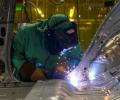
There was a slowdown in the manufacturing sector, which grew at 1.2 per cent in June 2019 as compared to 6.9 per cent a year ago.

Market leader Maruti Suzuki sold 51,274 units, down 49.61 per cent from the same month last year. Hyundai Motor sold 21,320 units, a decline of 49.25 per cent and Mahindra & Mahindra sold 8,075 units, down 54.54 per cent.
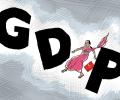
During the six-month period (April-September 2019), the Indian economy grew 4.8 per cent as against 7.5 per cent in the same period a year ago.

You can make all the speeches you want, you cannot argue against 39 straight months of slowing, observes Aakar Patel.

The country has been clocking a sub-5 per cent growth for the past two financial years, mainly on account of slowdown in investments.

Finance Minister Nirmala Sitharaman on Wednesday said the Indian economy may have slowed down but there is no threat of a recession.

The main factor boosting production was a sustained rise in new work inflows.
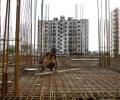
The construction sector is now India's second-largest employer after agriculture, the trend coinciding with India's high-growth phase and decline in poverty levels

Addressing the BRICS investment seminar in Mumbai ahead of the 5-nation Summit in Goa on October 15-16, Jaitley said the government has put FDI on automatic route in almost 90 per cent of the areas that are eligible for foreign direct capital.

Prices may go up because of higher energy costs, caused by the rise in shipping charges, with commercial vessels taking a longer route to avoid the troubled Red Sea region, the finance ministry said on Monday. Iran-backed Houthi rebels of Yemen are repeatedly attacking ships in the Red Sea. While the global economy is grappling with challenges such as sticky inflation, sluggish growth, and mounting fiscal pressure, India's external sector could face "potential risks" due to the ongoing geopolitical tensions, according to the finance ministry's report on the review of the Indian economy.

Attributing the slowdown to the Reserve Bank's tight monetary policy and global problems, the government on Tuesday informed Parliament that economic growth in 2011-12 will moderate to 7.5 per cent, from 8.5 per cent in the previous fiscal.

Economic growth, which we are taking for granted, slows for a completely different set of local or global factors and the Modi premium vanishes, observes Debashis Basu.

Being one of the early commentators to flag economic slowdown and caution investors on corporate earnings, Gautam Chhaochharia, head of India research, UBS Securities, in an interview with Hamsini Karthik says the markets remain in an expensive zone despite the recent correction.

The Indian economy is projected to grow at 6.3 per cent in current financial year aided by investment and domestic demand. According to a World Bank report released on Tuesday, India continues to show resilience against the backdrop of a challenging global environment. In India, which accounts for the bulk of South Asia region, growth is expected to remain robust at 6.3 per cent in 2023-24, India Development Update of the World Bank said.

The general elections in April/May 2024 are expected to add volatility to the Indian markets, keeping investors on their toes.

Tata Motors surpassed Maruti Suzuki (India) (MSIL) to become the most-valuable automobile company, in terms of market capitalisation (mcap), after a gap of seven years. With this, the company's stock hit a new high on the BSE on Tuesday (January 30). The combined mcap of Tata Motors (Rs 285.51 crore) and Tata Motors DVR (Rs 29,119 crore) stood at Rs 3.146 trillion.

India's cement demand has consistently shown double-digit growth over the past few quarters, primarily driven by infrastructure spending. However, dealers and industry executives note that state elections, festival season, and, in some markets, weddings and pollution may temporarily disrupt this demand story. While the festival season typically sees a slowdown in construction activity, some dealers anticipate this lull extending throughout the entire month as multiple states enter election mode.
The Reserve Bank of India on Wednesday retained the economic growth projection for the current financial year at 10.5 per cent, while cautioning that the recent surge in COVID-19 infections has created uncertainty over the economic growth recovery. In its last policy review, the RBI had projected a GDP growth rate of 10.5 pc for FY'22. Taking various factors into consideration, it said, "the projection of real GDP growth for 2021-22 is retained at 10.5 per cent consisting of 26.2 per cent in Q1, 8.3 per cent in Q2, 5.4 per cent in Q3 and 6.2 per cent in Q4."

'What happens in the real estate market is that once the prices go up it goes on to stay at that level.' 'It might not increase and at the same time the prices will not come down too.'

In household savings, there has been a persistent shift towards physical assets.

'Unless the economy is sound in the country how can only three movies collected so much business in a single day?'

'Valuations of midcaps and smallcaps have reached very high levels, and hence to that extent leave little margin of safety.'
Slowdown in economic growth in most South Asian countries barring India is expected to result in severe job cuts and lower incomes, impacting poverty alleviation programmes, a UN report said on Tuesday.

The ongoing key reforms such as sops for manufacturing, easier labour laws, wooing FDI inflows and privatisation will help improve productivity and support long-term growth at 7.5-8 per cent levels, which if played out well, can help India contribute 15 per cent of global GDP growth by FY2026, says a report. According to a report pencilled by the India economist at UBS Securities, Tanvee Gupta Jain, the country has the lowest manufacturing costs among peers, even though China retains significant ecosystem advantages and despite that India and Vietnam appear most likely to benefit from a shift out of China.

"The Monetary Policy Committee recognises that there is monetary policy space for future action. However, given the evolving growth-inflation dynamics, the MPC felt it appropriate to take a pause at this juncture," the RBI said in its fifth bi-monthly monetary policy for this fiscal.

'The top five IT giants are not hiring, but most of the freshers want to start their careers with the top five IT firms.' 'In today's scenario this is a challenge.'
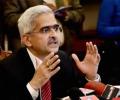
All members of the Monetary Policy Committee (MPC) -- Shashanka Bhide, Ashima Goyal, Jayanth R Varma, Mridul K Saggar, Michael Debabrata Patra and Shaktikanta Das -- had unanimously voted to keep the policy repo rate unchanged at 4 per cent after the three-day meet of the panel earlier this month. Further, except Varma, other members voted to continue with the accommodative stance as long as necessary to revive and sustain growth on a durable basis and continue to mitigate the impact of COVID-19 on the economy, while ensuring that inflation remains within the target going forward. Varma expressed reservations on this part of the MPC resolution, according to the minutes.
Having delivered the numbers, Nitin Paranjpe talks about his plans to make Hindustan Unilever future-proof.
However, predictions that economic conditions will normalise after the elections underpinned optimism regarding the outlook and supported a stronger upturn in employment.

For the smart phone industry, it has been a lacklustre quarter of CY2024, with sales falling by 3-4 per cent over the same period last year, according to Counterpoint Research projections. However, with the launch of many new models in Q1 of CY24, overall shipments grew year-on-year by 10-12 per cent. In CY23 shipments remained flat, ending the year with 152 million units.

From its lows in December, the stock of Tata Motors is up about 15 per cent. The gains came on the back of better than expected December volumes in its UK-based subsidiary Jaguar Land Rover (JLR). This coupled with gradual recovery in the global passenger vehicle demand, improving profitability due to product mix and lower commodity costs are expected to be key positives for the company.

The banking sector emerged as an outlier when the rest of India Inc witnessed a slowdown in earnings in FY23. The combined net profit of listed public and private sector banks was up 39.4 per cent year-on-year (YoY) last financial year and their share in India's gross value added (GVA) or gross domestic product (GDP) at factor cost rose to a record high of nearly 1 per cent up, from 0.8 per cent a year ago. Listed banks' combined net profit grew to Rs 2.36 trillion in FY23, from Rs 1.69 trillion a year ago. In comparison, India GVA at current prices was up 15.2 per cent YoY at Rs 247 trillion in FY23; it was around Rs 214 trillion a year ago.

NITI Aayog's Rajiv Kumar accused former prime minister Manmohan Singh and senior Congress leader P Chidambaram of creating a 'false narrative'
Its economy needs radical re-engineering on a par with its original transformation three decades ago.

At a pre-Budget meeting, the FM was asked to ensure that NBFCs come out of the liquidity crisis they are facing with the help of RBI. They also spoke about the futility of trying to achieve a 3 per cent fiscal deficit target over the medium term.

The Softbank-backed company has set a price band of Rs 72 to Rs 76 per share for the maiden share sale and is expected to test the appetite for new-age loss-making companies.
Reflecting subdued economic sentiments, the growth slipped to decade's low of 5 per cent in 2012-13, though improvement in fiscal deficit figures provided some relief to the government, which is battling slowdown.

BSE- mid-cap & small-cap outperformed benchmark indices

'Growth would have to be 7% in the October-March period, if the year as a whole is to clock 6%.' 'Who would bet on that when, in the world of real numbers, both exports and imports have continued to fall, car sales have continued to slump, and the industrial production index shows yet again a drop in output?', asks T N Ninan.
